
Explainer
Kinetic recovery rope vs snatch strap: what's the difference?
Kinetic recovery ropes and snatch straps both use stored energy, but they behave very differently at low loads. What that means for sand recoveries in the UAE, and when to use a tow strap or chain instead.
By The Off Road Rope · Updated · 5 min read
Key takeaways
- Both kinetic ropes and snatch straps store energy by stretching, then use it to pull a stuck vehicle free.
- The difference is how much they stretch at low loads. Most kinetic ropes and snatch straps stretch only 5 to 10% at the 1 tonne a typical sand recovery needs; The Off Road Rope stretches 20%.
- More stretch at low loads means a smoother pull with fewer jolts on the vehicles and the people inside them.
- Chains and static tow straps do not stretch. They are for towing, not for snatch recoveries.
How both of them work
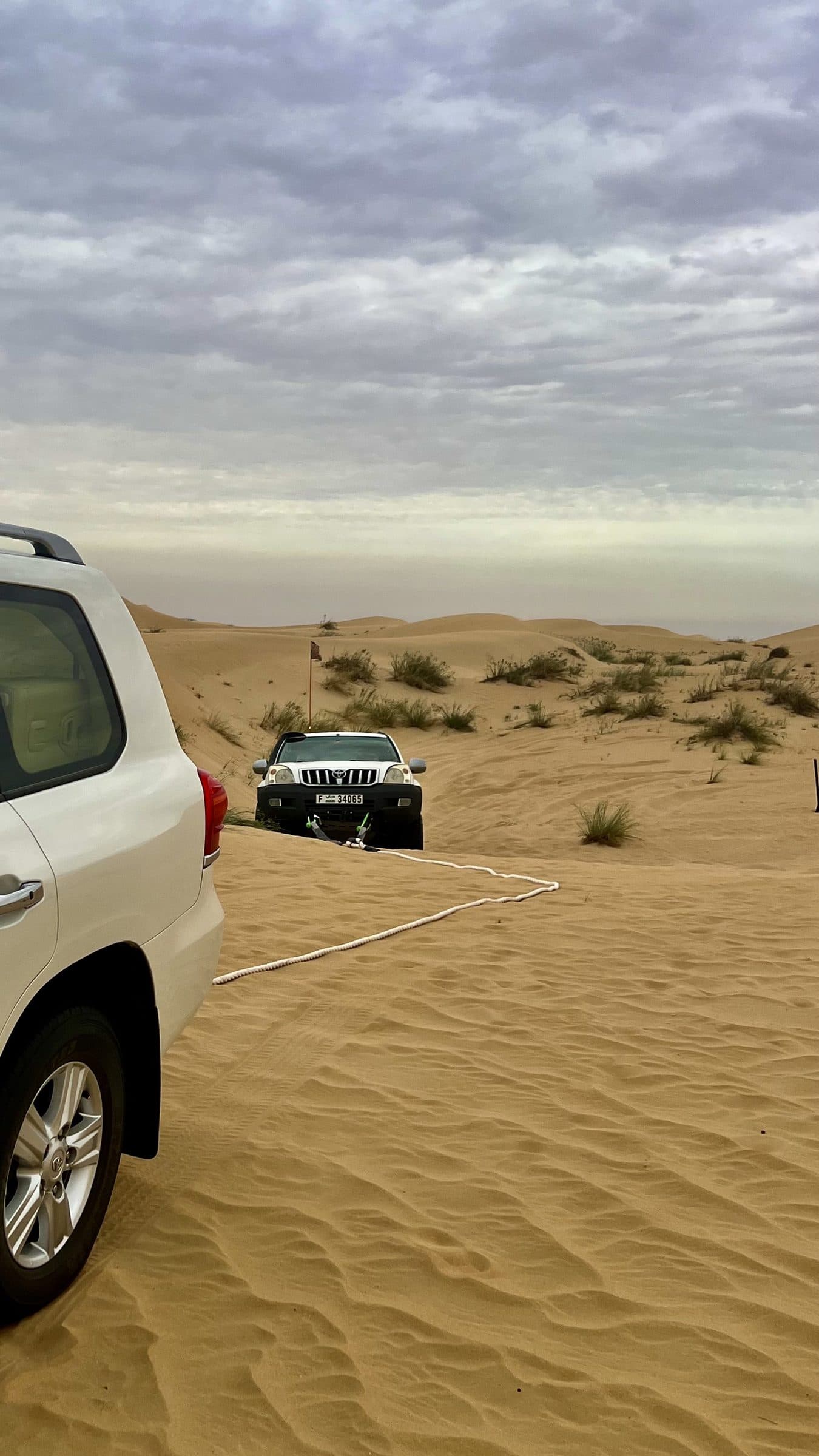
A kinetic recovery, sometimes called a snatch recovery, uses momentum. The recovery vehicle drives away, the rope or strap stretches and stores that energy, and as it recoils it transfers the energy to the stuck vehicle.
That is very different from a steady tow. A snatch recovery can multiply a vehicle's pulling force, which is why a lighter vehicle can recover a much heavier one.
The difference: stretch at low loads
Snatch straps are flat woven webbing. Kinetic ropes are rope. Both can store energy, but what matters in sand is how much they stretch at the load the recovery actually needs, which for a vehicle stuck in flat, soft sand is about 25% of its Gross Vehicle Weight.
For a 3.2 tonne Land Cruiser that is about 1 tonne with a safety margin. At that load, most kinetic energy ropes and snatch straps only stretch around 5 to 10%. The Off Road Rope stretches 20% at 1 tonne and 25% at 2 tonnes.
| Kinetic rope (The Off Road Rope) | Typical snatch strap or kinetic rope | Chain or static tow strap | |
|---|---|---|---|
| Stretch at about 1 tonne | 20% | Around 5 to 10% | Next to none |
| Energy transfer | Smooth, progressive pull | Sharper pull | Shock load |
| Use for snatch recoveries | Yes | Yes | No |
| Best for | Soft sand, dunes, mud, sabkha | General recoveries | Towing on firm ground |
Why the smoother pull matters
Compared with straps or chains, a stretchy kinetic rope does away with the sudden jolts or jerks that can damage vehicles or injure occupants. The energy is released as a dynamic pull that is highly effective in deep mud and soft sand.
It also gives you more versatility: a lighter vehicle can recover a much heavier one, because its pulling force is multiplied using momentum.
Which should you carry?
For UAE dune and sand driving, carry a kinetic rope rated to 2 to 3 times your Gross Vehicle Weight, and a static tow strap if you expect to tow on firm ground. Do not use chains or static straps for snatch recoveries.
Check the size guide for the strength and length that suit your vehicle, then read how to do a kinetic rope recovery safely.
Questions
Is a kinetic rope better than a snatch strap?
For sand recoveries, a kinetic rope that stretches a lot at low loads gives a smoother pull than a snatch strap that only stretches 5 to 10% at the same load. The Off Road Rope stretches 20% at 1 tonne and 25% at 2 tonnes.
Can I use a tow strap for a snatch recovery?
No. Static tow straps and chains do not stretch, so all the energy arrives as a shock load. Use a kinetic rope or snatch strap designed for snatch recoveries.
Keep reading
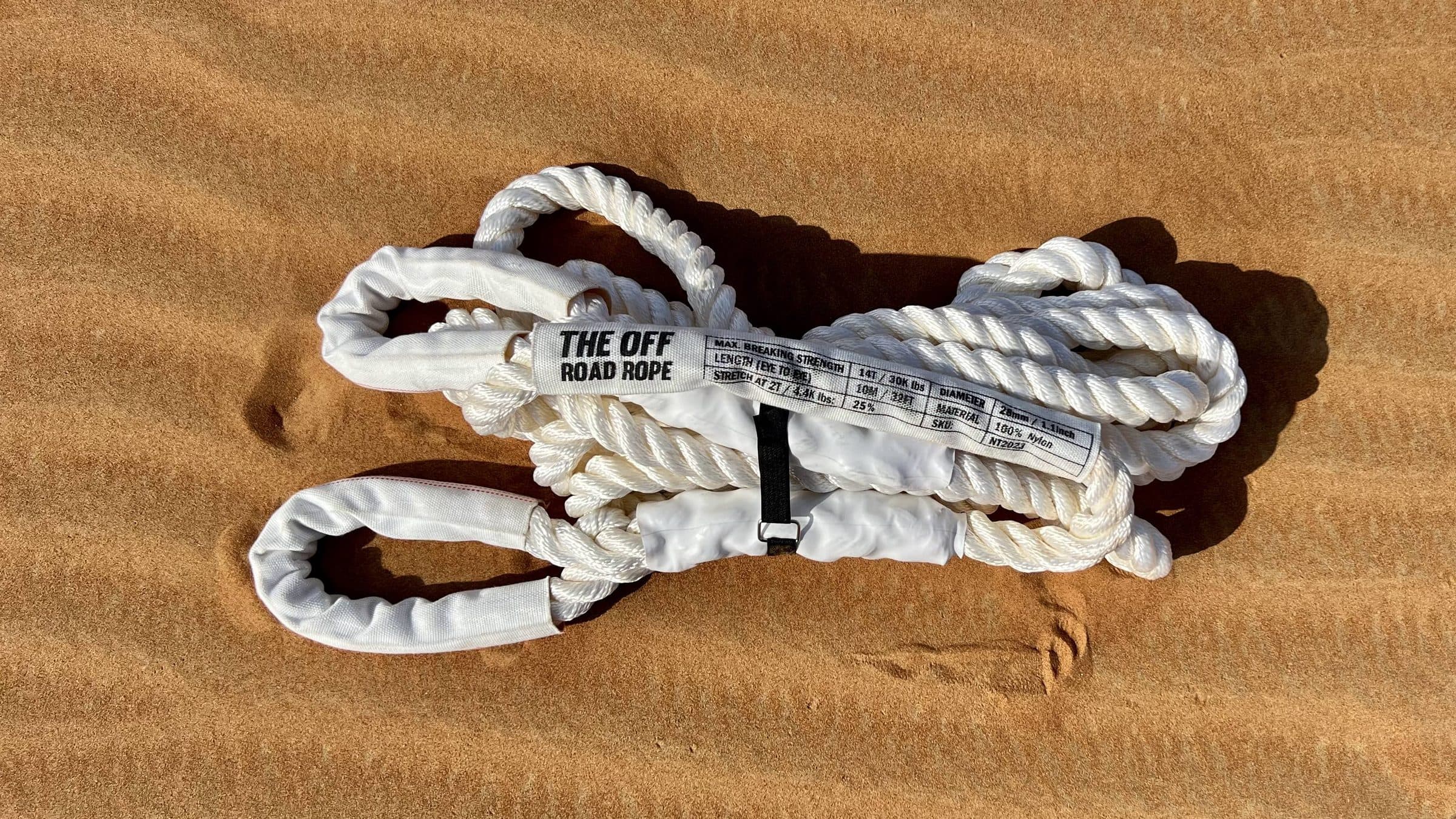
Buyer's guide · 7 min read
How to choose the best kinetic recovery rope for the UAE
What makes a kinetic recovery rope right for UAE sand, heat and sabkha: stretch at low loads, breaking strength, UV resistance, length, labelling and warranty. With test data.
Read the guide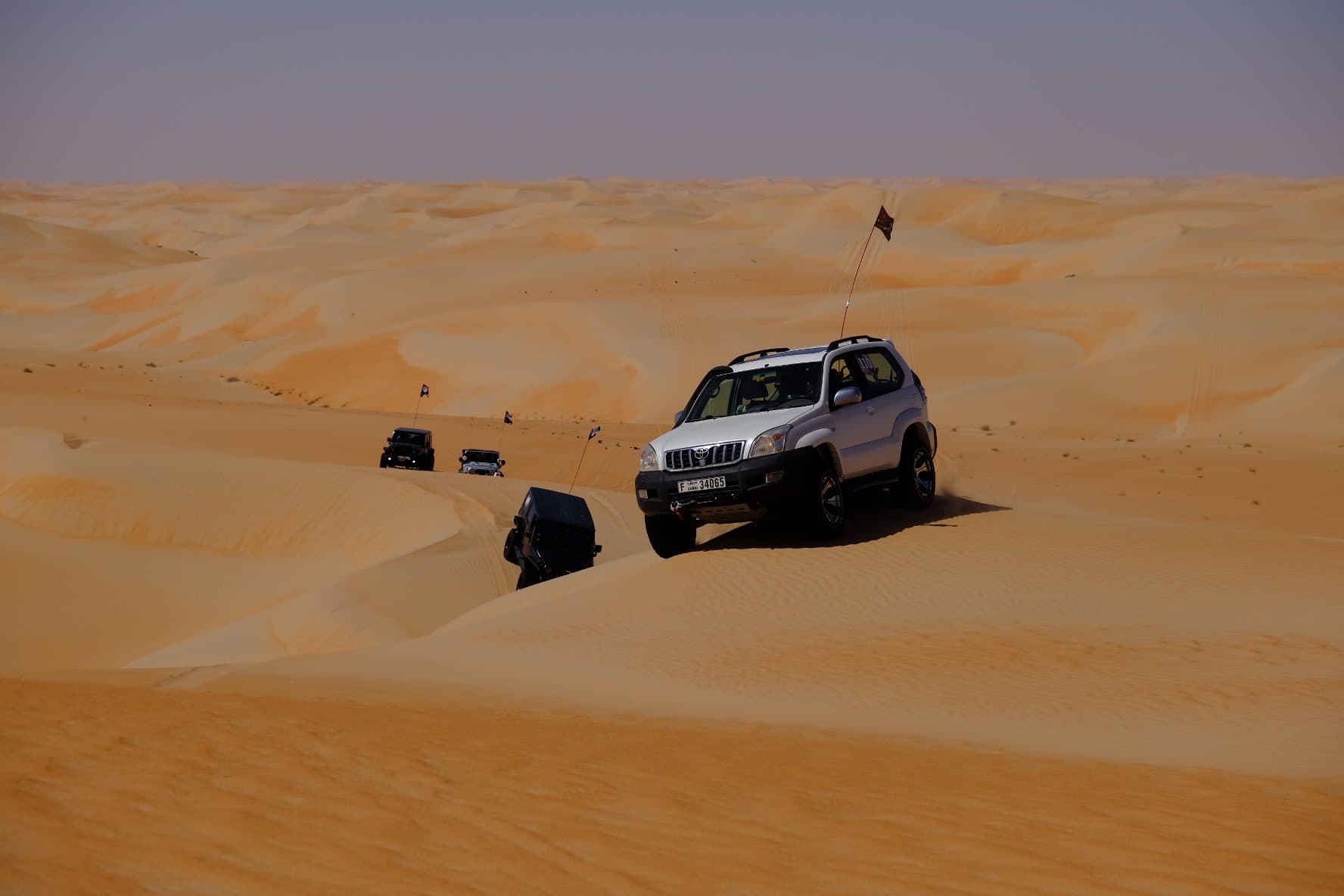
How to · 5 min read
How to do a kinetic rope recovery in soft sand
A step-by-step kinetic rope recovery for soft sand and dunes: preparing the stuck vehicle, rated recovery points, safe distances, building momentum and caring for the rope afterwards.
Read the guide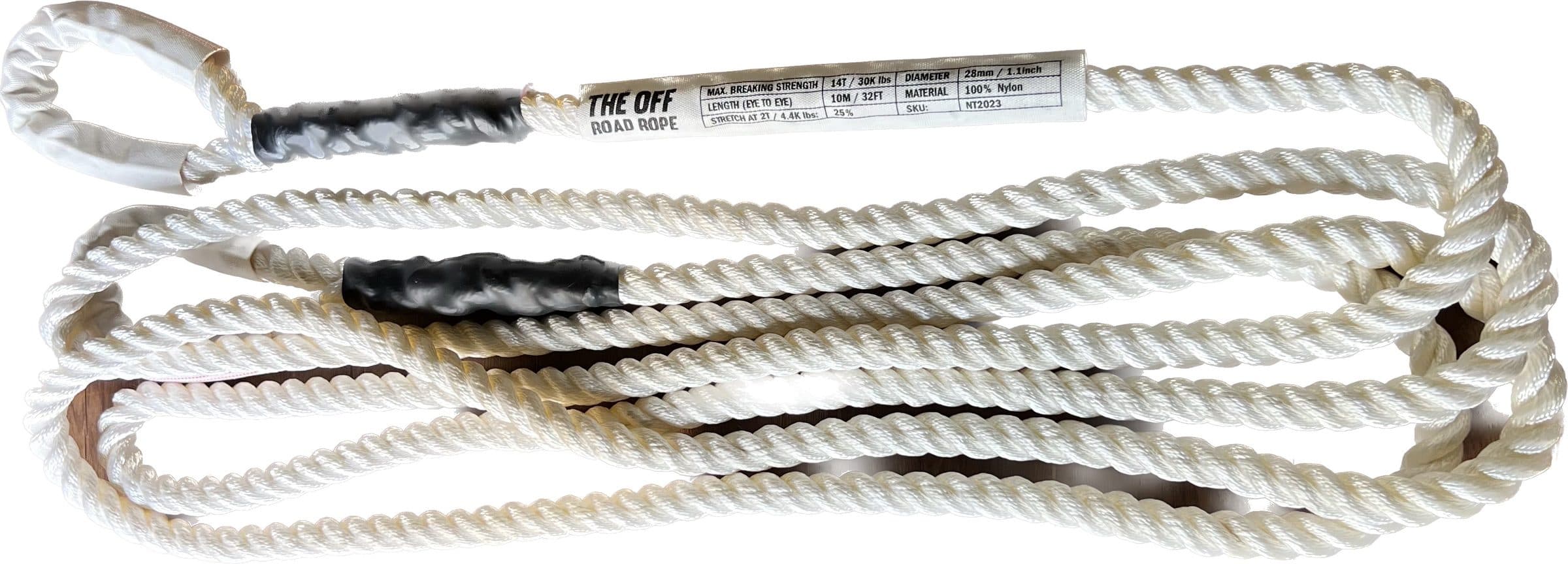
Size guide · 4 min read
What size kinetic recovery rope do I need?
Work out the breaking strength and length of kinetic rope you need from your vehicle's Gross Vehicle Weight, with a ready reckoner for UAE sand recoveries.
Read the guide