
How to
How to do a kinetic rope recovery in soft sand
A step-by-step kinetic rope recovery for soft sand and dunes: preparing the stuck vehicle, rated recovery points, safe distances, building momentum and caring for the rope afterwards.
By The Off Road Rope · Updated · 5 min read
Key takeaways
- Stop spinning your wheels. Clear sand from in front of the wheels and under the vehicle before any pull.
- Only connect to rated recovery points, never a tow ball.
- Keep everyone well clear of the rope, to the side and never in line with it.
- Start with gentle momentum and build up. The rope does the work.
- After the recovery, shake out the sand and store the rope dry and out of the sun.
Step by step
- 1
Stop and assess
As soon as the vehicle stops moving forward, stop spinning the wheels; it only digs you deeper. Look at what the vehicle is resting on.
- 2
Prepare the stuck vehicle
Clear sand from in front of all four wheels and from under the chassis. Lower tyre pressures for sand if you have not already, following your vehicle's guidance.
- 3
Connect to rated recovery points
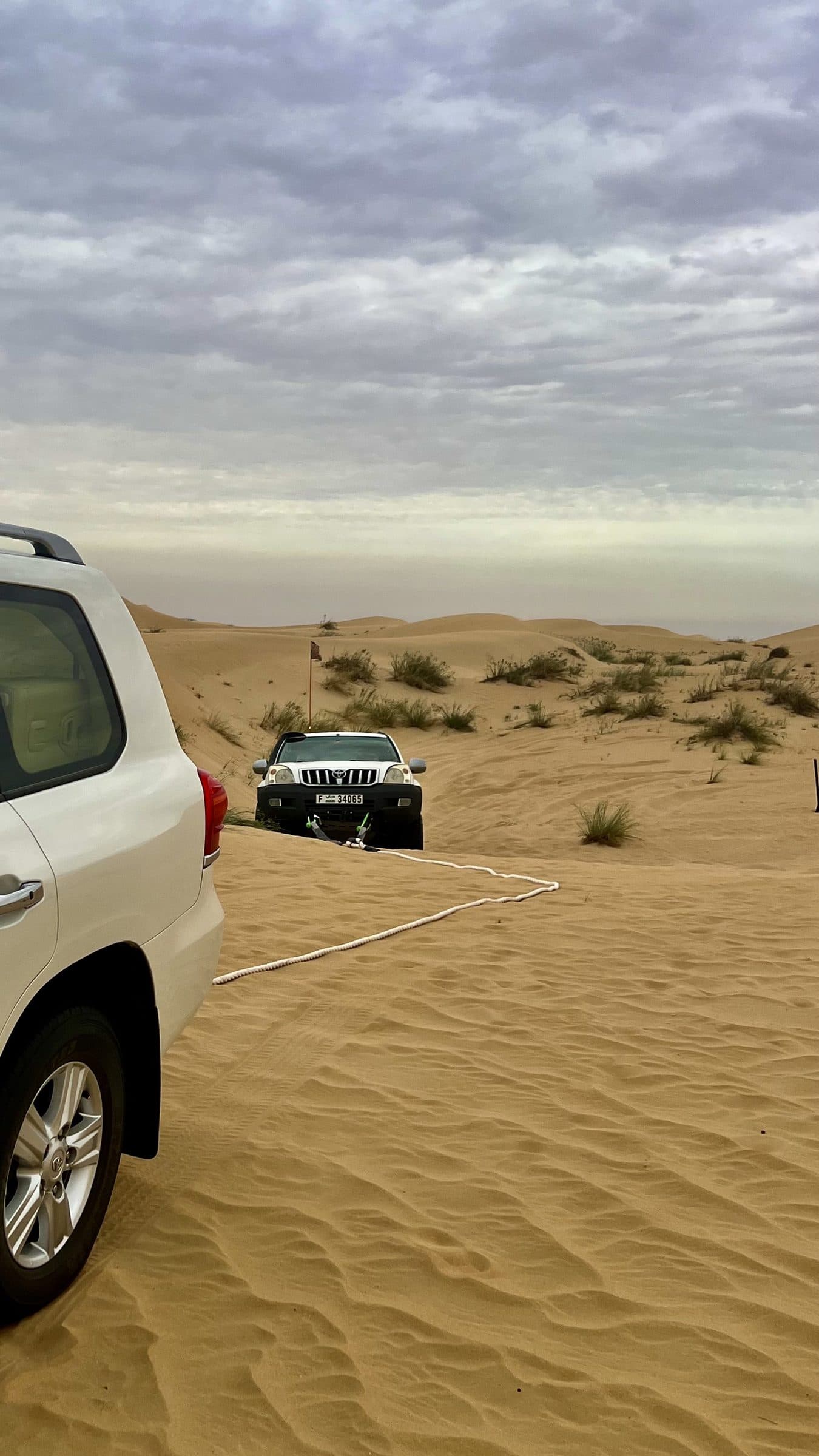
Attach the rope eyes to rated recovery points on both vehicles, using rated soft shackles or bow shackles. Never use a tow ball.
- 4
Lay out the rope
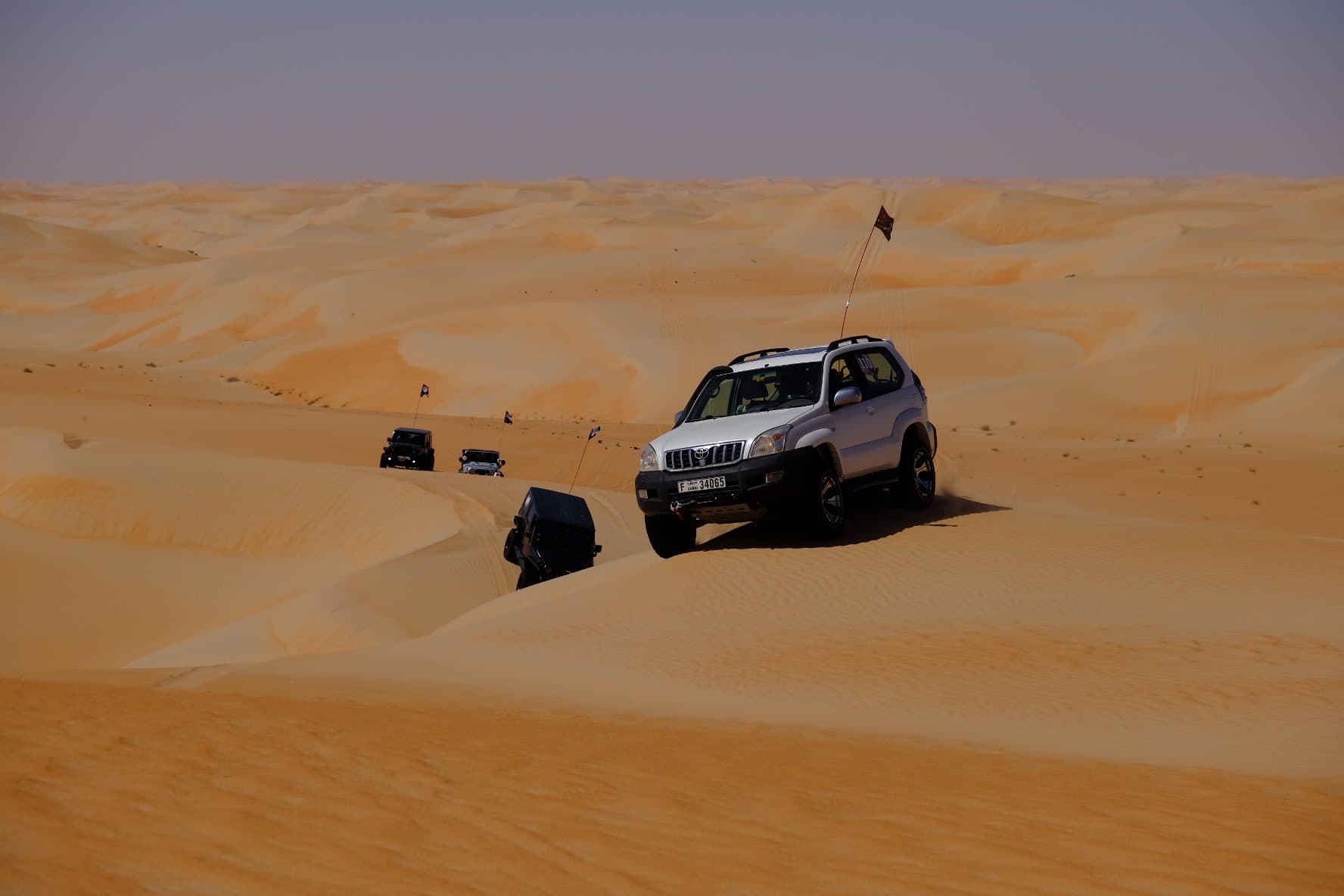
Lay the rope straight out in the direction of recovery, with some slack between the vehicles.
- 5
Clear the area and agree signals
Keep everyone well away from the rope, to the side and never in line with it. Agree signals or use radios so both drivers know when to go and when to stop.
- 6
Build momentum gently
The recovery vehicle drives away smoothly. The rope stretches, stores the energy and recoils. Start gently and add a little more momentum on each attempt if needed.
- 7
Drive with the pull
The stuck vehicle drives gently in the direction of the pull as the rope comes tight, wheels straight.
- 8
Stop on firm ground
Once free, both vehicles roll to a stop somewhere firm before anyone disconnects the rope.
Why stretch makes this easier
Most sand recoveries need only about 25% of the stuck vehicle's Gross Vehicle Weight. A rope that stretches 20% at 1 tonne, like The Off Road Rope, turns a gentle pull-away into a smooth recovery, without the jolts that come from a rope or strap that barely stretches at that load. Read kinetic rope vs snatch strap.
After the recovery
- Inspect the rope, eyes and sleeves for cuts, abrasion or damage.
- Shake out the sand. Sand trapped between the strands wears the fibres.
- If it is salty or muddy from sabkha, rinse it in fresh water and let it dry fully.
- Store it dry, in its bag and out of direct sun. The Off Road Rope is UV treated, but no nylon enjoys a UAE summer on the dashboard.
Questions
Can I attach a kinetic rope to a tow ball?
No. Only attach a kinetic rope to rated recovery points, using rated soft shackles or bow shackles.
How fast should the recovery vehicle go?
Start gently and build momentum on later attempts only if needed. A kinetic rope that stretches well at low loads does the work without a hard run-up.
Keep reading
Explainer · 5 min read
Kinetic recovery rope vs snatch strap: what's the difference?
Kinetic recovery ropes and snatch straps both use stored energy, but they behave very differently at low loads. What that means for sand recoveries in the UAE, and when to use a tow strap or chain instead.
Read the guide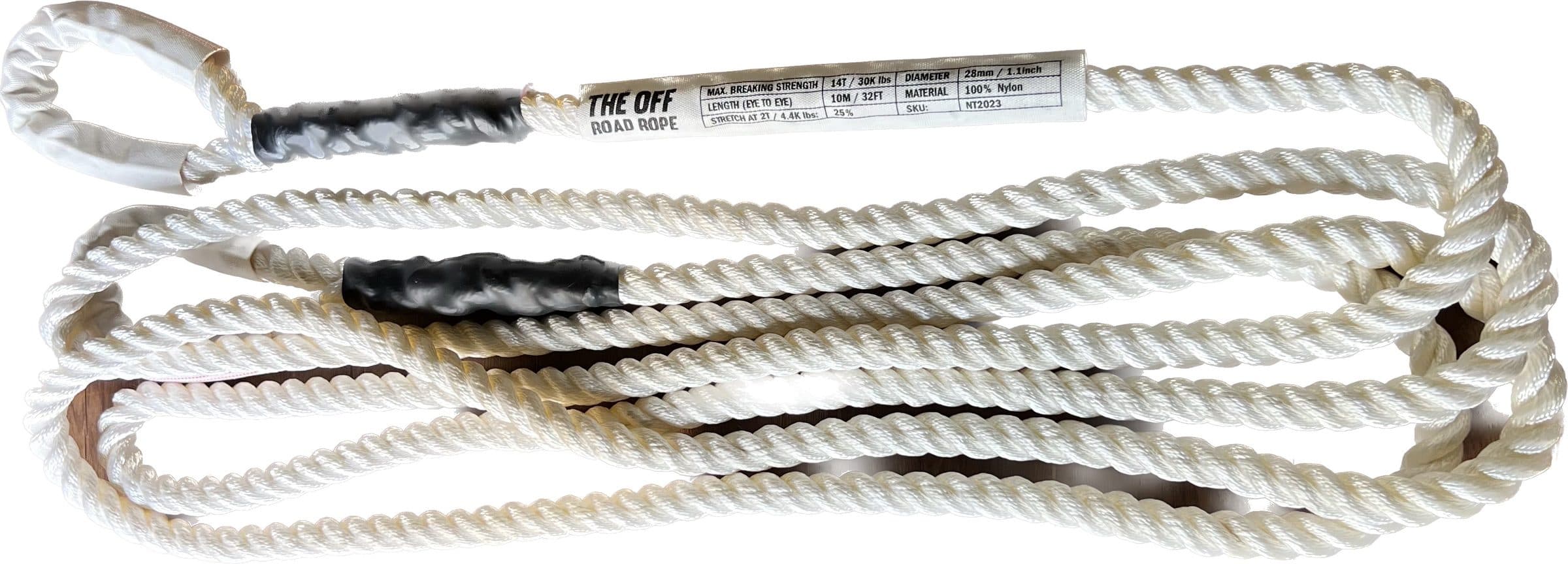
Size guide · 4 min read
What size kinetic recovery rope do I need?
Work out the breaking strength and length of kinetic rope you need from your vehicle's Gross Vehicle Weight, with a ready reckoner for UAE sand recoveries.
Read the guide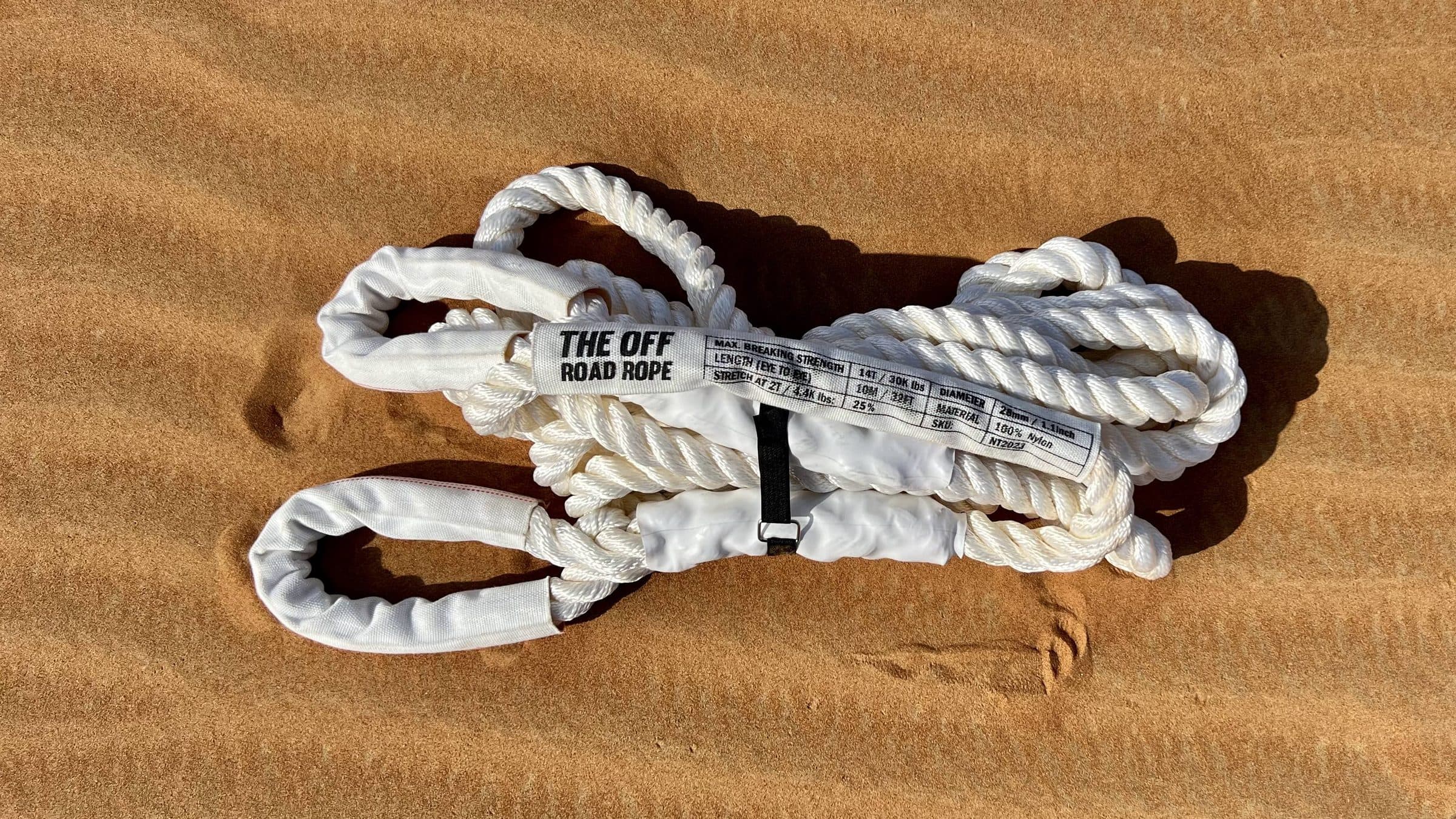
Buyer's guide · 7 min read
How to choose the best kinetic recovery rope for the UAE
What makes a kinetic recovery rope right for UAE sand, heat and sabkha: stretch at low loads, breaking strength, UV resistance, length, labelling and warranty. With test data.
Read the guide